Picture this. A crash cart races down the hospital hallway. Nurses scatter. A doctor yells for calcium chloride in healthcare situations because seconds matter. This isn’t table salt we’re talking about. This is the heavy lifter. The big gun. The one they grab when hearts forget how to beat.
Calcium chloride injection sits in every emergency room for good reason. It’s USP calcium chloride, meaning it meets strict quality standards. No impurities. No shortcuts. Just pure medicine ready to jumpstart a failing heart.
But here’s the thing. This stuff is intense. It works fast. Sometimes too fast if you’re not careful. Think of it like coffee. It wakes you up. Too much makes you jittery. With calcium chloride, too much can stop your heart completely. No pressure, right?
Let’s break down what this magical salt actually does. Why do doctors reach for it during codes? And why nurses secretly worry about the extravasation risks of calcium chloride every time they start an IV.
| ⚕️ Calcium Chloride Injection, USP (10%) Medical & Clinical Specifications — For Intravenous Use Only | |
|---|---|
| 🔬 Identification & Composition | |
| Active Pharmaceutical Ingredient | Calcium chloride dihydrate — CaCl₂ · 2H₂O [USP designation] Dihydrate |
| Concentration / Strength | 100 mg/mL of calcium chloride dihydrate (10% solution). Each mL provides 27 mg (1.4 mEq) of elemental calcium (Ca⁺⁺) and 1.4 mEq chloride (Cl⁻) [citation:2][citation:6]. |
| Molecular Formula (Anhydrous) | CaCl₂ · (Anhydrous mol. wt. 110.98 ; dihydrate mol. wt. 147.01) [citation:1]. |
| CAS Numbers | Dihydrate: 10035-04-8 ; Anhydrous: 10043-52-4 [citation:1][citation:4]. |
| 🧪 Physicochemical Characteristics | |
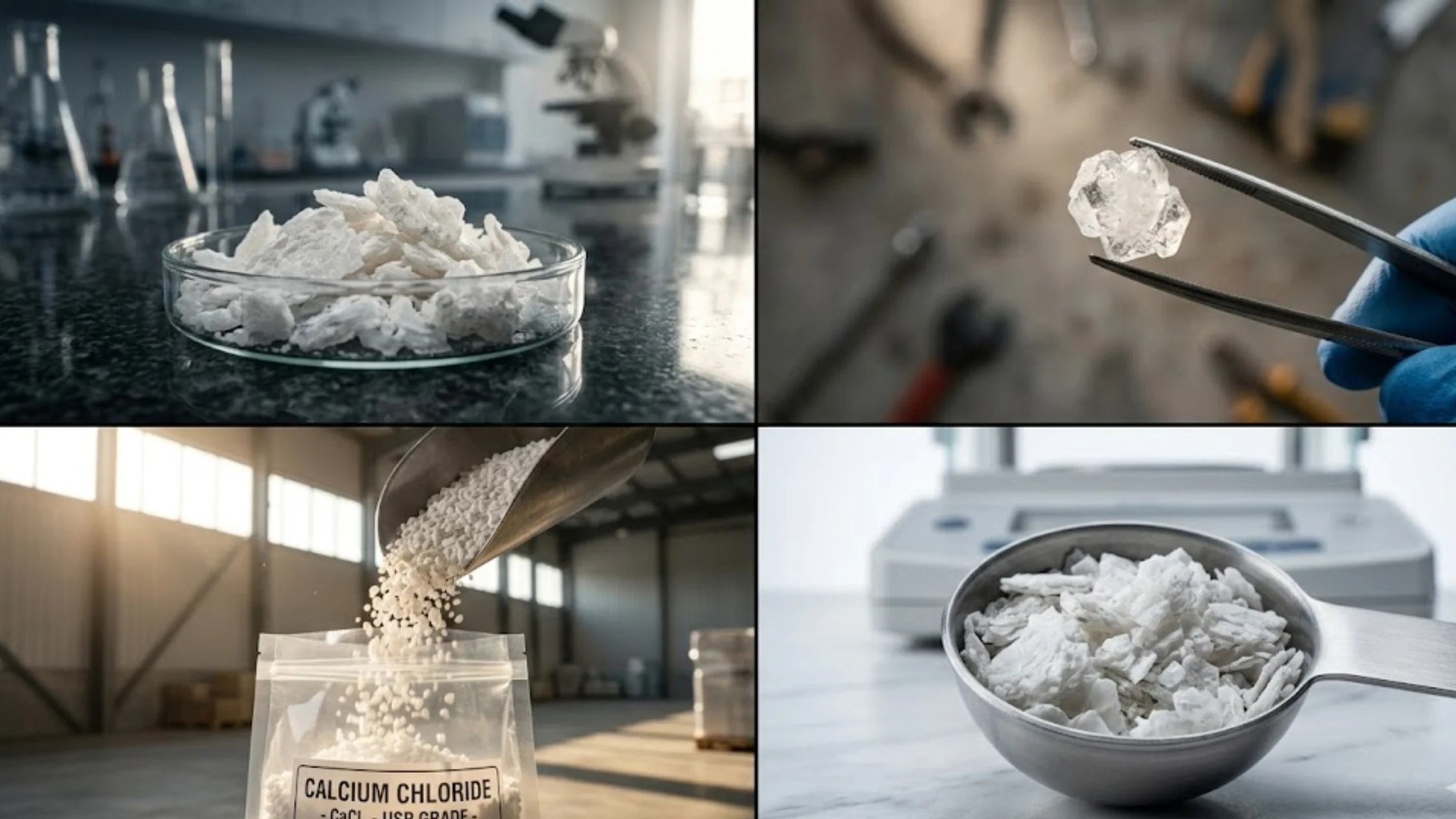
| Appearance | Clear, colorless, odorless solution (injectable form). Active ingredient: white granules or fragments. [citation:2][citation:7]. |
| pH Range | 5.5 – 7.5 (when diluted to 5% solution with water for injection). Adjusted with HCl/NaOH if necessary [citation:2][citation:6]. |
| Osmolarity / Tonicity | 2.04 mOsmol/mL (calculated). Hypertonic solution — must NOT be injected IM or subcutaneously. [citation:2][citation:6]. |
| Solubility | Freely soluble in water (74 g/100 mL at 20°C for anhydrous). Dissolves with liberation of heat (exothermic) [citation:4]. |
| 📊 USP Purity & Quality Limits | |
| Assay (as CaCl₂·2H₂O) | 99.0% – 107.0% of labeled dihydrate [citation:1]. |
| Heavy Metals | ≤ 0.001% (limit 10 ppm) [citation:1]. |
| Aluminum (if labeled for hemodialysis) | ≤ 1 µg/g (for products intended for dialysis). Standard injection contains ≤ 1000 mcg/L aluminum [citation:1][citation:7]. ⚠️ Toxicity risk in renal impairment/premature neonates [citation:2]. |
| Magnesium & Alkali Salts | ≤ 1.0% (residue limit) [citation:1]. |
| Iron, Aluminum & Phosphate | No turbidity or precipitate with ammonium hydroxide/ammonium chloride TS [citation:1]. |
| 💉 Clinical & Administration Specifications | |
| Route of Administration | STRICT intravenous ONLY — preferably via central or deep vein. Contraindicated IM/SubQ (risk of necrosis/abscess) [citation:2][citation:3][citation:8]. |
| FDA Indication | Treatment of acute symptomatic hypocalcemia in adults and pediatric patients requiring prompt increase in plasma calcium [citation:3][citation:8]. |
| Adult Dosage (Hypocalcemia) | 200 mg – 1,000 mg (2–10 mL) IV slow infusion, repeated every 1–3 days based on serum ionized calcium [citation:2][citation:6]. |
| Pediatric Dosage | 2.7 – 5 mg/kg of calcium chloride (equiv. 0.027–0.05 mL/kg of 10% solution). Repeat q4–6h if needed. Monitor ionized Ca closely [citation:2][citation:6]. |
| Maximum Infusion Rate | ≤ 1 mL/minute (100 mg/min) — too rapid causes hypotension, bradycardia, syncope, or cardiac arrest. [citation:2][citation:3][citation:8]. |
| Extravasation Management | Stop immediately. Infiltrate area with 1% procaine + hyaluronidase; apply warm heat. Tissue necrosis/sloughing possible [citation:2][citation:6]. |
| Drug Incompatibilities | Ceftriaxone — forms precipitates. Contraindicated in neonates (≤28 days) even with separate lines. Flush lines thoroughly between uses [citation:3][citation:8]. Avoid mixing with phosphates, bicarbonates, sulfates [citation:2]. |
| ⚠️ Boxed & Critical Warnings (FDA) | |
| Absolute Contraindications | • Ventricular fibrillation • Asystole / electromechanical dissociation • Neonates requiring ceftriaxone • Digitalis toxicity (relative) [citation:2][citation:3][citation:8]. |
| Digoxin Interaction | Calcium potentiates digoxin toxicity → arrhythmias. If unavoidable, monitor ECG continuously [citation:3][citation:8]. |
| Aluminum Toxicity | Contains aluminum. In renal impairment/premature neonates, cumulative Al may cause CNS/bone toxicity. Limit total parenteral Al to ≤ 5 mcg/kg/day [citation:2][citation:6]. |
| Adverse Reactions (acute) | Peripheral vasodilation, metallic/calcium taste, “heat wave”, tingling, burning at injection site, hypotension [citation:2][citation:6]. |
| 📦 Storage & Handling | |
| Storage Conditions | 20°C – 25°C (68°F – 77°F) ; excursions 15°–30°C allowed. Protect from moisture. Do not freeze. [citation:2][citation:5]. |
| Packaging | Single-dose 10 mL vials, prefilled Luer-Jet™ syringes (10 mL), or Ansyr® syringes. Discard unused portion. [citation:2][citation:7]. |
| Shelf-life | Typically 24–36 months when unopened (manufacturer dependent). Discard if solution discolored or particulate present. [citation:2][citation:5]. |
| 🏛️ Regulatory & Pharmacologic Identifiers | |
| USP-NF Reference | Official monograph: USP29–NF24, page 351 [citation:1]. |
| NDC Examples | 0409-1631-10 (Hospira), 51662-1452 (HealthFirst), 84549-304-01 [citation:2][citation:5][citation:10]. |
| FDA Application Number | ANDA 203477 / NDA 021117 (varies by labeler) [citation:3][citation:10]. |
| Pharmacologic Class | Blood Coagulation Factor [EPC]; Calcium [CS]; Divalent Cations [CS]; Phosphate Binder [EPC]; Increased Coagulation Factor Activity [PE] [citation:10]. |
What Exactly Is This Stuff?
Calcium chloride in healthcare isn’t your driveway de-icer. Medical grades are different. Much different.
It comes in small vials or prefilled syringes. Clear liquid. It looks like water. But this water packs a punch . Each milliliter contains 100 milligrams of calcium chloride dihydrate. That’s 1.4 milliequivalents of calcium ions ready to rock .
The syringe says 10%. Don’t let that fool you. This solution is hypertonic. Fancy word meaning it’s stronger than your blood. It pulls water toward it. That matters later when we talk about vein problems.
USP calcium chloride means the United States Pharmacopeia stamped its approval. Third-party testing. Quality checks. Consistency batch to batch . You want medicine made correctly when your heart stops.
The pH runs between 5.5 and 7.5 after dilution . Slightly acidic, but your body handles it. Usually. When things go right.
Why Your Body Begs for Calcium
Calcium isn’t just for bones. Sure, your skeleton holds most of it. About 99% actually . But that last 1% runs the show.
Every heartbeat needs calcium. Every muscle twitches. Every nerve is firing. Even blood clotting depends on it . Without calcium, your brain can’t talk to your muscles. Your heart can’t squeeze. Your blood won’t clot.
Here’s the wild part. Your body keeps calcium on a tight leash. Parathyroid hormone controls it. Vitamin D helps absorb it. Calcitonin lowers it when things get crazy . This balancing act happens constantly without you noticing.
Until something breaks.
Then calcium drops. Muscles cramp. Fingers tingle. Heart rhythm goes wonky. That’s when calcium chloride for hypocalcemia treatment saves the day .
The Big Showdown: Calcium Chloride vs. Calcium Gluconate
This debate heats up break rooms faster than stolen lunch food.
Calcium chloride vs. calcium gluconate isn’t even close in emergencies. Here’s why.
Calcium chloride packs three times more elemental calcium per milliliter . One gram of calcium chloride gives you 270 milligrams of actual calcium. One gram of calcium gluconate? Only 93 milligrams . Do the math.
That means you need less fluid to deliver more medicine. Critical during cardiac arrest when every second counts and fluid overload hurts.
Studies confirm what veterans know. Equal calcium doses work the same regardless of which salt you pick . The difference? Speed. Calcium chloride hits faster because it doesn’t need liver processing . Gluconate must convert first. Chloride shows up ready to work.
But here’s the catch. Calcium chloride burns. It irritates veins. It destroys tissue if it leaks . Gluconate is gentler. Safer for peripheral IVs. Better for awake patients who don’t need emergency dosing .
So the rule emerged. Chloride for codes and central lines. Gluconate for floor patients and maintenance. Simple.
Emergency! When Seconds Actually Count
Cardiac Arrest Chaos
Calcium chloride for cardiac arrest follows strict rules. You don’t just throw it at every dead heart.
Evidence shows routine use doesn’t help . But specific situations demand it. Think dialysis patients with sky-high potassium. Think kidney failure with EKG changes. Think of overdose situations where calcium channel blockers stopped the heart .
The dose during arrest? Adults get 1 to 2 grams IV push over 10 to 20 seconds . Kids get 20 milligrams per kilogram . Maximum one gram even for big kids .
You can repeat once after 10 minutes if needed . But don’t go crazy. More isn’t better.
Hyperkalemia Horror
Potassium toxicity kills. Fast. When kidneys fail, potassium climbs. EKG shows peaked T waves. Wide QRS. The heart becomes irritable.
Calcium doesn’t lower potassium. Important point. It stabilizes the heart membrane so it stops freaking out . Buys time for other treatments to actually remove potassium.
The dose matches cardiac arrest numbers . Push it slowly if the patient has a pulse. Fast if they don’t.
Overdose Nightmares
Calcium channel blocker overdoses terrify doctors. Verapamil. Diltiazem. Nifedipine. These pills stop calcium from entering heart cells. Too many stop the heart completely.
Calcium channel blocker overdose treatment uses massive calcium doses. Way more than standard replacement. Sometimes, continuous infusions for hours or days .
Start with 20 milligrams per kilogram over 5 minutes . If that helps, start an infusion at 20 to 50 milligrams per kilogram per hour . Monitor closely. These patients need ICU-level care.
Hypocalcemia Help
Low calcium happens for many reasons. Removed parathyroid glands during thyroid surgery. Massive blood transfusions that bind calcium. Severe infections. Pancreatitis. Alkaline blood from hyperventilating .
Symptoms creep up. Tingling lips and fingers. Muscle cramps. Confusion. Seizures in bad cases. Chvostek sign, where tapping the cheek makes the facial muscles twitch. Trousseau sign, where the blood pressure cuff triggers hand cramping.
Calcium chloride for hypocalcemia treatment works fast. Adults get 200 milligrams to 1 gram slow IV . Kids get 10 to 20 milligrams per kilogram . Repeat based on blood levels and symptoms .
How to Give This Stuff Safely
Calcium chloride IV administration guidelines exist for a reason. Break them, and bad things happen.
First rule. Central line preferred. Always . This stuff burns veins like bleach. Peripheral lines work in emergencies, but watch them like a hawk.
Second rule. Slow down for patients with pulses. Cardiac arrest gets a rapid push. Everyone else gets 5 to 10-minute infusions . Maximum rate 100 milligrams per minute .
Third rule. Flush the line before and after. Especially after sodium bicarbonate. Those two form calcium carbonate. Chalk in your veins. Not good .
Fourth rule. Never mix with phosphates. Never mix with ceftriaxone. Never mix with TPN . Precipitation happens. Tiny crystals wreck lungs and kidneys.
Fifth rule. Stop if the heart rate drops below 100 in kids . Calcium slows the heart when given too fast.
Dosing By Numbers
Adults
For calcium chloride dosage for adults vs. pediatrics, the math changes.
Adults with low calcium get 200 to 1000 milligrams slow IV. Maybe repeat every 1 to 3 days . Depends on blood work.
Emergency situations use 1 to 2 grams. Over 10 minutes if stable. Push if coding .
Pediatrics
Kids aren’t tiny adults. Their bodies handle drugs differently.
Calcium chloride dosage for adults vs. pediatrics shows kids need weight-based dosing. 20 milligrams per kilogram for emergencies . 10 to 20 milligrams per kilogram for hypocalcemia .
The maximum single dose is 1 gram even for teenagers . Don’t exceed adult amounts.
Neonates need special attention. Their kidneys are immature. This product contains aluminum, which builds up in tiny bodies . Use cautiously.
The Nightmare: Extravasation
Every nurse’s worst fear was realized. The IV blows. Medicine leaks into the tissue instead of the vein.
Extravasation risks of calcium chloride aren’t theoretical. This stuff causes tissue death. Sloughing. Necrosis. Permanent scars .
Why? Remember hypertonic? Pulls water from cells. Cells shrink and die. Calcium also deposits in tissues, causing inflammation. Bad combo.
Signs of trouble. Pain at the IV site. Burning. Redness. Swelling that spreads. Blisters later.
What to do. Stop the infusion immediately. Don’t pull the IV yet. Aspirate back to remove the drug. Then pull it. Mark the area. Notify the doctor. Applying warm compresses sometimes helps. Some guidelines suggest hyaluronidase injections to spread out the drug . Plastic surgery consultation for severe cases.
Prevention beats treatment. Use central lines when possible. Choose large veins, not small hand veins. Avoid foot veins and scalp veins in babies . Check IV function before giving. Watch throughout the infusion.
Side Effects You Might Feel
Side effects of calcium chloride injection range from annoying to deadly.
Mild stuff. Tingling sensations during injection. Metallic taste in the mouth . A feeling of warmth spreads through the body . Flushed skin. These pass quickly when the infusion slows.
Moderate problems. Blood pressure drops temporarily . Vein irritation. Pain at the injection site. Nausea. Sweating. Dizziness .
Serious complications. Heart slows too much. Irregular rhythms develop. Cardiac arrest from too-rapid injection . Severe tissue damage from leaks. Confusion from high calcium levels .
Chronic high calcium causes constipation, headaches, a metallic taste, and excessive thirst . Rare with single doses but possible with continuous infusions.
Who Should Never Get This
Contraindications matter. Ignore them at the patient’s peril.
Digitalis toxicity tops the list . Digoxin makes heart cells hold calcium. Adding more calcium causes tetany of the heart. Sustained contraction. No relaxation. Death.
Ventricular fibrillation without a clear cause . Calcium might make it worse.
High calcium states obviously. Hypercalcemia from cancer or an overactive parathyroid gland. More calcium hurts.
Kidney failure with high phosphate . Calcium phosphate crystals deposit in tissues. Lungs. Arteries. Organs fail.
What the Future Holds
New research explores calcium chloride in healthcare beyond emergencies. Thyroid cancer testing uses calcium stimulation to check calcitonin levels . Both chloride and gluconate work for this diagnostic test.
Continuous renal replacement therapy uses calcium chloride infusions to prevent clotting from citrate anticoagulation . This keeps dialysis running smoothly.
Research continues on optimal dosing for calcium channel blocker overdoses. No consensus yet on best protocols.
Quick Answers to Common Questions
Can you give calcium chloride and sodium bicarbonate together?
Never in the same line. They precipitate into calcium carbonate. Flush thoroughly between medications .
Why do nurses prefer gluconate for regular patients?
It’s safer for the veins. Less tissue damage if it leaks. Same calcium effect when dosed correctly .
How fast is too fast for an IV push?
Faster than 1 milliliter per minute in stable patients causes problems . Cardiac arrest is the only exception.
Can this help with a magnesium overdose?
Yes. Calcium antagonizes magnesium at the cellular level. First-line treatment for hypermagnesemia .
What’s the shelf life?
Unopened vials last for years at room temperature. Once opened, discard the unused portion .
The Bottom Line
Calcium chloride in healthcare saves lives. Real lives. Every day in emergency rooms worldwide. But it demands respect.
This isn’t gentle medicine. It’s powerful. Fast. Dangerous when misused. The same properties that restart hearts also destroy tissue and stop hearts when given incorrectly.
Know your indications. Check your dosing. Watch your IV site. Respect the drug, and it becomes your ally.
The next time you see that little vial emerge from a crash cart, you’ll understand. Clear liquid. Big responsibility. Lives hanging in the balance.
That’s the reality of electrolyte replacement therapy at its most intense. Simple salt. Complicated consequences. Perfect when everything aligns.
References
- Children’s Hospital of Eastern Ontario. Calcium Chloride [Internet]. CHEO ED Outreach; 2024 [cited 2026-03-01]. Available from: https://outreach.cheo.on.ca/manual/2318-0
- General Injectables & Vaccines, Inc. 10% Calcium Chloride 100 mg/mL Injection, USP [Internet]. FDA; 2018 [cited 2026-03-01]. Available from: https://www.accessdata.fda.gov/spl/data/307ef405-b3db-4aab-b385-676c5330d021/307ef405-b3db-4aab-b385-676c5330d021.xml
- PedMed. CALCIUM CHLORIDE 10% INJECTION Neonatal [Internet]. 2025 [cited 2026-03-01]. Available from: https://www.pedmed.org/neoprintdrug.php?drugID=30
- BCEHS. Calcium Chloride [Internet]. BCEHS Handbook; [cited 2026-03-01]. Available from: https://handbook.bcehs.ca/drug-monographs/calcium-chloride/
- 中国医药信息查询平台. 氯化钙 [Internet]. [cited 2026-03-01]. Available from: https://www.dayi.org.cn/drug/1154879
- Pfizer Medical. calcium chloride injection, USP – ANSYR® Description [Internet]. [cited 2026-03-01]. Available from: https://www.pfizermedical.com/calcium-chloride/description
- PedMed. CALCIUM CHLORIDE Paediatric [Internet]. 2021 [cited 2026-03-01]. Available from: http://pedmed.org/pedprintdrug.php?drugID=57
- PedMed. CALCIUM CHLORIDE [Internet]. 2025 [cited 2026-03-01]. Available from: https://pedmed.org/pedshowdrug.php?drugID=57
Read More: stomach virus
About the Author