It sounds like something your hippie aunt would post on Facebook.
A tiny needle. A piece of jewelry. Suddenly, the chaos in your head just… stops.
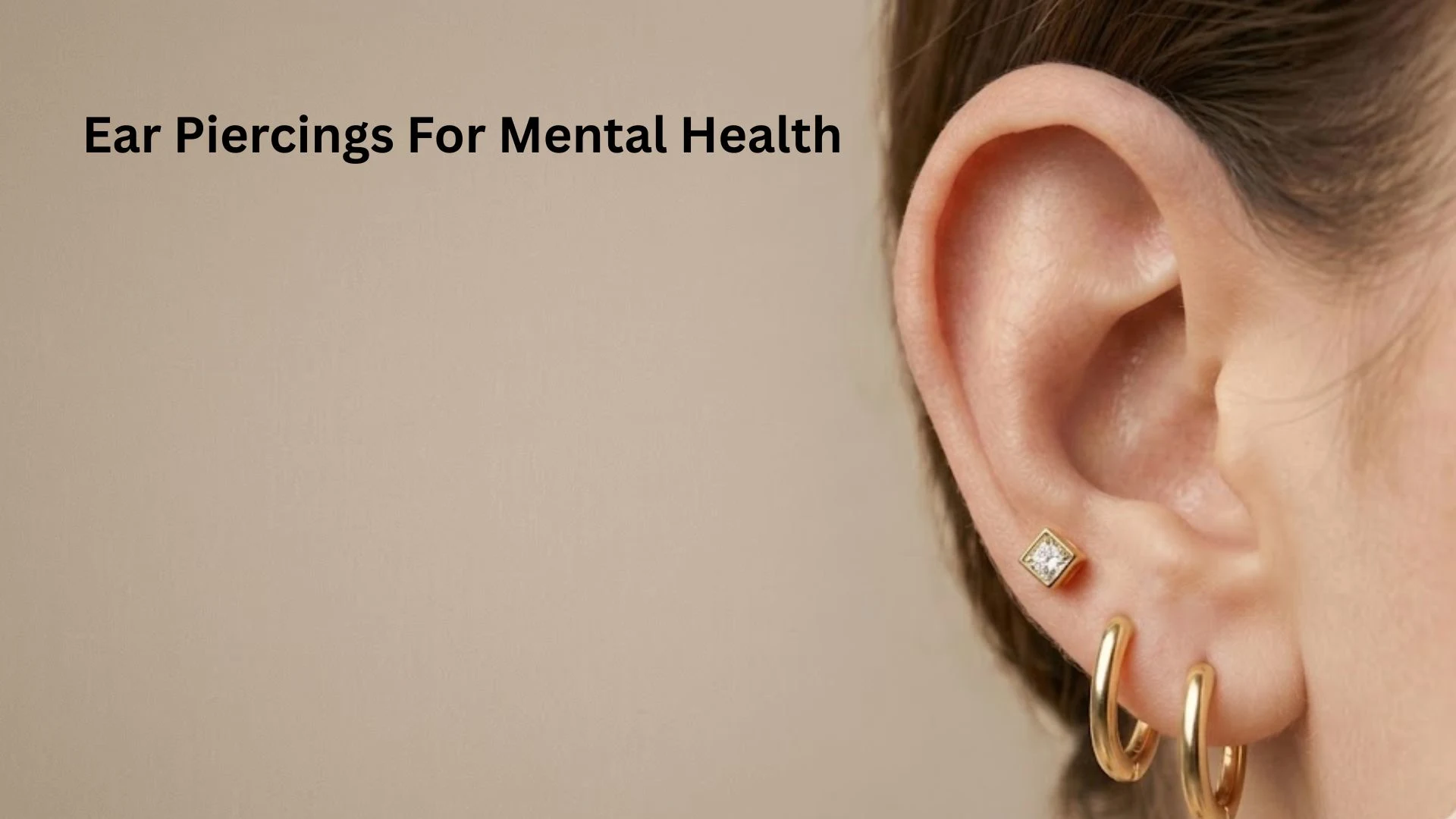
We’re talking about ear piercings for mental health. Not just a fashion statement, but a supposed backdoor to your nervous system. For years, people have been swearing that their ear piercings benefit mental health by hitting the right spot.
I was skeptical, too.
Then I met Sarah at a coffee shop. Her hands were steady while pouring latte art—a perfect swan. But six months ago, she couldn’t leave her apartment without shaking.
“It was the dizziness,” she said, pointing to her inner ear. “I got it on a whim. A last-ditch effort before trying medication.”
She didn’t claim it was magic. But she claimed it was a reset button.
This is the weird, wild world of using your ears to fix your brain. Let’s dive in. We’re going to look at pressure point ear piercing anxiety techniques, the science of ear acupuncture piercing anxiety, and whether a daith piercing for anxiety relief is a legitimate tool or just a very expensive placebo.
| # | Precaution | Why It Matters for Mental Health & Safety |
|---|---|---|
| 1 | Choose an APP-certified professional | Anxiety can spike from infections, scarring, or botched placements. Only a trained piercer (ideally APP member) uses single-use needles, implant-grade titanium, and sterile technique. Safe anatomy placement ensures you’re hitting intended pressure points without causing nerve damage or chronic inflammation — both of which can worsen stress. |
| 2 | Healing is a marathon, not a sprint | Cartilage piercings (daith, rook, conch) take 6–12 months to fully heal. The daily aftercare (saline sprays, no sleeping on the side, avoiding headphones) can feel overwhelming if you’re already anxious. Prepare mentally: rushed healing leads to irritation bumps or rejection, which may add frustration and defeat the goal of stress relief. |
| 3 | Know your skin & medical red flags | Keloid-prone skin, bleeding disorders, autoimmune conditions, or taking blood thinners can turn a piercing into a medical complication. Uncontrolled inflammation raises cortisol levels and can trigger panic. Always disclose your full health history to your piercer; if in doubt, consult a dermatologist or primary care doctor beforehand. |
| 4 | Never use it as a replacement for clinical care | A daith or tragus piercing is *complementary*, not a cure. Stopping prescribed anxiety medications, skipping therapy, or ignoring severe depression because of a piercing can be dangerous. Use the piercing as a grounding tool or self-care ritual, but keep your mental health team (therapist, psychiatrist) in the loop for a safe, integrated approach. |
| 5 | Manage expectations: placebo vs. physiology | While vagus nerve stimulation and auriculotherapy have scientific backing, results vary wildly. Believing a piercing will “fix” you can lead to disappointment if symptoms persist. The most successful outcomes happen when you treat the piercing as an *anchor* — a tactile reminder to breathe, meditate, or practice grounding — rather than a magic bullet. |
The “Does It Work?” Panic: Debunking the Hype
We have to start with the awkward question: does ear piercing help anxiety? The internet is a mess of opinions.
One thread says: “I got it and cried tears of joy because the noise in my head vanished.”
The next thread says: “Worst pain ever. My anxiety is worse now because I have an infection.”
So which is it?
Let’s get real. Your ear is not a magic off-switch. Ear piercing therapy for stress relief relies on the concept of auriculotherapy. This isn’t new. It dates back to ancient China. It’s like a remote control for your entire body.
Every part of your ear connects to a specific organ or system.
- The upper ear? The back, shoulders, and skeleton.
- The lobe? The head and brain.
- The inner curve (where the daith sits)? The vagus nerve.
When you stick a needle (or a piercing needle) into a specific spot, you’re essentially pressing a button on the remote. You’re trying to tell the brain, “Hey, relax.”
But here’s the catch: a piercing is a permanent wound. Acupuncture is a form of temporary needle therapy.
If you walk into a tattoo shop expecting a therapist, you might be disappointed. You’re getting a piece of metal, not a prescription.
The Daith: The Rockstar of Anxiety Relief
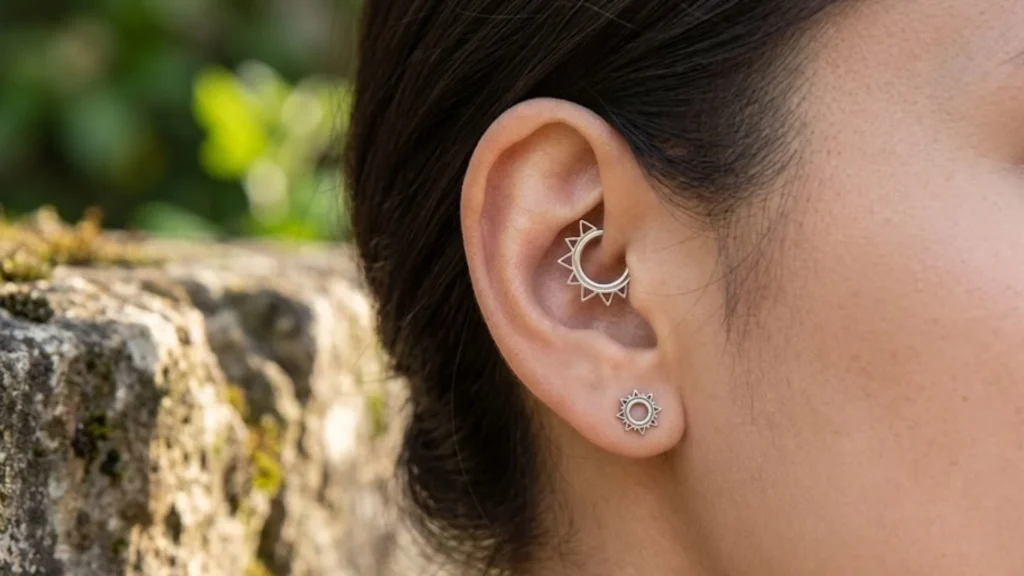
Why does everyone obsess over the daith piercing benefits to mental health?
The daith is that tough, inner cartilage fold right above your ear canal. It’s a bitch to heal. It hurts like hell. And it sits directly on a major acupuncture point known as “Shen Men,” or the “Spirit Gate.”
In traditional Chinese medicine, the Spirit Gate is where anxiety enters and exits the body.
I watched a friend get hers done. She was pale. Sweating. The piercer, a guy named Leo with more ink than skin, didn’t sell her a dream. He said, “Look, this is ear acupuncture piercing anxiety style. But it’s a blunt instrument. It might work. It might do nothing. But it will look cool.”
That’s the honest truth most shops won’t tell you.
There’s a small study—nothing massive, but intriguing—that looked at ear piercings for mental health and migraine relief. Participants reported a significant drop in frequency and intensity of migraines after a daith piercing. Since anxiety and migraines often go hand in hand (your brain gets stressed, your head explodes), the theory is that the piercing stimulates the vagus nerve.
It’s biohacking. But instead of an implant in your hand, it’s a gold hoop in your cartilage.
Beyond the Daith: Mapping Your Ear for Sanity
We get tunnel vision on the daith. But if you look at a map of pressure points in the ear for stress, there is a whole roadmap waiting for you.
If you’re serious about ear reflexology piercing points, you have options. It’s not a one-size-fits-all situation.
- The Tragus: That little nub of cartilage right in front of your ear hole. In auriculotherapy, this targets the “hunger point” and the “adrenal gland.” For anxiety, the adrenal point is key. Anxiety floods your body with cortisol (the stress hormone). Stimulating the adrenal point can theoretically help regulate that dump of panic.
- The Conch (Inner and Outer): This is the big bowl of the ear. The inner conch is deep. The outer conch is the flat part. These points are associated with the kidneys and the central nervous system. In TCM, the kidneys are where fear lives. A conch piercing hits that hard.
- The Rook: This is the ridge above the daith. It’s a tougher spot to heal, but it’s tied to the “brain stem” point. If you have racing thoughts or insomnia, this is where people look for holistic ear piercing benefits.
I’ve seen people get a constellation of piercings. They call it their “anxiety constellation.” One for the racing heart. One for the gut rot. One for the intrusive thoughts.
Is it science? It’s a mix of ear acupuncture vs piercing culture. Acupuncture is precise, sterile, and temporary. Piercing is permanent pressure. It’s like the difference between pushing a doorbell once and taping the button down. Sometimes, constant pressure helps. Sometimes, it just annoys you.
The Painful Flop: Why It Might Backfire
I need to tell you about my friend Mark.
Mark saw the TikTok videos. He was convinced ear piercings and mental wellness were the answer. He walked into a shop at 10 PM on a Friday, drunk on cheap beer and desperation.
He got a death sentence.
The next week was a nightmare. It wasn’t healing. It was red. Swollen. He slept on it by accident and woke up with a throbbing infection that crawled down his neck. His anxiety didn’t go down. It skyrocketed.
He had to go to urgent care. They gave him antibiotics and told him to remove the jewelry.
Mark learned the hard way that ear piercing for migraine and anxiety only works if you don’t get a staph infection.
Here’s the gritty reality:
- Healing sucks. Cartilage takes 6 to 12 months to heal. If you are already anxious, the stress of managing a wound can make you feel worse.
- Pain is a trigger. For some people, the acute pain of the piercing is a release. For others, it’s a trauma that makes their nervous system freak out.
- Placebos are real. Don’t discount it. If you believe it works, your brain will release dopamine. That’s a win. But if you rely on a piece of metal to save your life, and it fails, the fall is hard.
The Science: Auriculotherapy vs. The Instagram Filter
Let’s get nerdy for a second.
Auriculotherapy ear points are well documented in medical journals. The World Health Organization actually has a standardized list of ear points used for addiction, pain, and anxiety.
The National Center for Biotechnology Information (NCBI) has published studies showing that ear acupuncture piercing anxiety treatments can reduce cortisol levels.
But here’s the rub: those studies are about acupuncture needles inserted by a trained practitioner, not an 18-gauge hollow needle by a guy named Spike who wears a leather apron.
The bridge between ear pressure points, mental health, and piercing is shaky.
However, we are seeing a massive shift in 2024 and 2025. Alternative therapy ear piercings are booming. Shops in LA and New York are now advertising “curated ears for wellness.” They’ll map your ear based on your symptoms.
- Stressed? Let’s pierce the Shen Men.
- Tired? Let’s hit the endocrine point.
- Sad? We’ll do the thymus gland point.
It’s turning ear piercings for mental health into a custom suit, not a t-shirt. And while the evidence is mostly anecdotal, the demand is undeniable.
A Practical Guide: If You’re Going to Do It
If you’re ready to try ear piercing therapy for stress relief, do it right. This isn’t Claire’s at the mall. You don’t use a gun. You don’t do it yourself with a safety pin.
Step 1: Find a Professional
Look for an APP (Association of Professional Piercers) certified studio. They use single-use needles, titanium jewelry, and they know anatomy.
Step 2: Consult, Don’t Command
Ask them: “Do you know about auriculotherapy points?” If they look at you blankly, leave. Find a piercer who understands acupressure ear piercing benefits. Some shops now have piercers who are also acupuncturists. That’s the gold standard.
Step 3: Choose Your Metal
Implant-grade titanium or 14k gold. Nothing less. Your body is already stressed. Don’t throw a cheap nickel at it. That’s an invitation for inflammation, which is the enemy of anxiety.
Step 4: Manage the Aftercare
This is the therapy.
- Don’t touch it.
- Don’t sleep on it (use a travel pillow with a hole).
- Saline spray only.
The act of healing requires mindfulness. For some, the ritual of cleaning the piercing twice a day becomes a grounding exercise. It forces you to stop, breathe, and care for yourself. That, in itself, is a form of natural remedies for anxiety.
The Skeptic’s Corner: A Random Industry Observation
I talked to a piercer in Portland who has been doing this for twenty years.
He said, “Five years ago, I was just doing basic lobes and navels. Now, 70% of my clients are women between 25 and 40 asking for the daith for anxiety.”
He paused. “I’m not a doctor. But I’ve noticed something. The ones who come in calm, who eat a good meal first, who research the piercing—they usually say it helps. The ones who come in frantic, expecting the piercing to fix them instantly? They usually hate it.”
That’s the psychology.
Ear piercings for mental health are a tool. They are a physical anchor. When the panic rises, you can reach up and touch the jewelry. You can press it. It’s a tactile reminder that you are here, in your body, in this moment.
That grounding technique—touching a physical object—is a proven CBT strategy. The piercing just makes it cooler.
The Economics of Healing: Cost vs. Value
Let’s talk money.
A quality daith piercing with implant-grade titanium will cost you between $50 and $100 for the service, plus $30 to $80 for the jewelry.
Compare that to a single therapy session ($100–$200), or a month of medication ($10–$200 depending on insurance).
Suddenly, the holistic ear piercing benefits look cheap.
But don’t confuse cheap with simple. If you budget for the piercing but not for the aftercare (saline spray, no headphones for 3 months, a neck pillow), you’re setting yourself up for failure.
I’ve seen people spend $300 on a gold septum clicker for their daith and then ruin it by using cheap alcohol to clean it. Don’t be that person.
The Pressure Points You Can Use Right Now
You don’t have to get a needle to test the theory.
Before you commit to a permanent ear cartilage piercing anxiety relief plan, try acupressure ear piercing benefits without the piercing.
There are three spots you can press right now:
- Shen Men (The Spirit Gate): Located at the top of the inner triangle of the ear. Press it. Hold for 30 seconds. Breathe. This is the exact spot of the daith piercing.
- The Zero Point: In the center of the ear, where the cartilage meets the lobe. This is for grounding. If you feel dizzy or disconnected, press here.
- The Sympathetic Point: On the inner ridge of the ear, near the top. This calms the nervous system.
If pressing these spots makes you feel a twinge of relief, then a permanent piercing might be a worthwhile investment.
If you feel nothing? Maybe skip the needle.
Conclusion: The Tiny Rebellion
So, what’s the verdict on ear piercings for mental health?
It’s not a cure.
It’s not a replacement for a psychiatrist.
It won’t fix your trauma.
But it can be a powerful ally.
In a world where we are desperate for control over our own minds, a piercing is a choice. It’s a tiny rebellion against the chaos. It says, “I am doing something. I am taking action.”
Whether the daith piercing benefits mental health comes from vagus nerve stimulation or the simple act of committing to a long, difficult heal—does it matter? If it helps you breathe easier, if it gives you a moment of peace, then it’s worth it.
Just don’t go in expecting a miracle. Go in expecting a project. Heal it right. Take care of it. And maybe, while you’re obsessing over whether the bump is a keloid, you’ll forget to have a panic attack for a few minutes.
That’s a win in my book.
1. Does ear piercing help with anxiety immediately?
No. Unlike medication, which can take effect in hours or weeks, a piercing is a physical trauma. Any relief from ear piercing benefits mental health often comes either instantly from the endorphin rush (which fades) or gradually over months as the area heals and the vagus nerve is stimulated. Don’t expect immediate results.
2. Which ear piercing is best for anxiety?
The daith piercing for anxiety relief is the most famous due to its location on the “Shen Men” pressure point. However, the tragus (for adrenal regulation) and the conch (for central nervous system) are also popular choices for ear pressure points mental health. A qualified piercer can help map your ear based on your specific symptoms.
3. Is it dangerous to get a piercing for mental health?
The piercing itself is safe if done by a professional with sterile equipment. The danger lies in unrealistic expectations. If you use ear piercing therapy for stress relief as your only treatment and neglect therapy or medical advice, you could be ignoring serious underlying conditions. Always maintain a holistic approach to wellness.
4. How do I know if my piercing is stimulating the right pressure point?
You may feel a dull ache or a sense of “release” when the piercing is done. During healing, you might notice a subtle reduction in tension. However, if you experience severe pain, swelling, or discharge, it’s likely a healing issue (like an infection) and not a nerve reaction. Consistent pressure from the jewelry provides continuous acupressure ear piercing benefits.
5. Can I use acupuncture instead of a piercing?
Yes. Ear acupuncture vs piercing is a valid debate. Acupuncture is temporary, non-permanent, and administered by a licensed professional. It’s a great way to test if ear acupuncture piercing anxiety techniques work for you before committing to a permanent piercing. If acupuncture helps, a piercing might provide long-term maintenance.
References & Resources
- National Center for Biotechnology Information (NCBI): Studies on Auriculotherapy for Anxiety and Pain Management.
- Mayo Clinic: Resources on Vagus Nerve Stimulation and its role in treating depression and anxiety.
- Association of Professional Piercers (APP): Safety standards, aftercare guidelines, and locating certified professionals.
- World Health Organization (WHO): Standardized Auriculotherapy Point Locations.
Read More: Mochi Health
About the Author