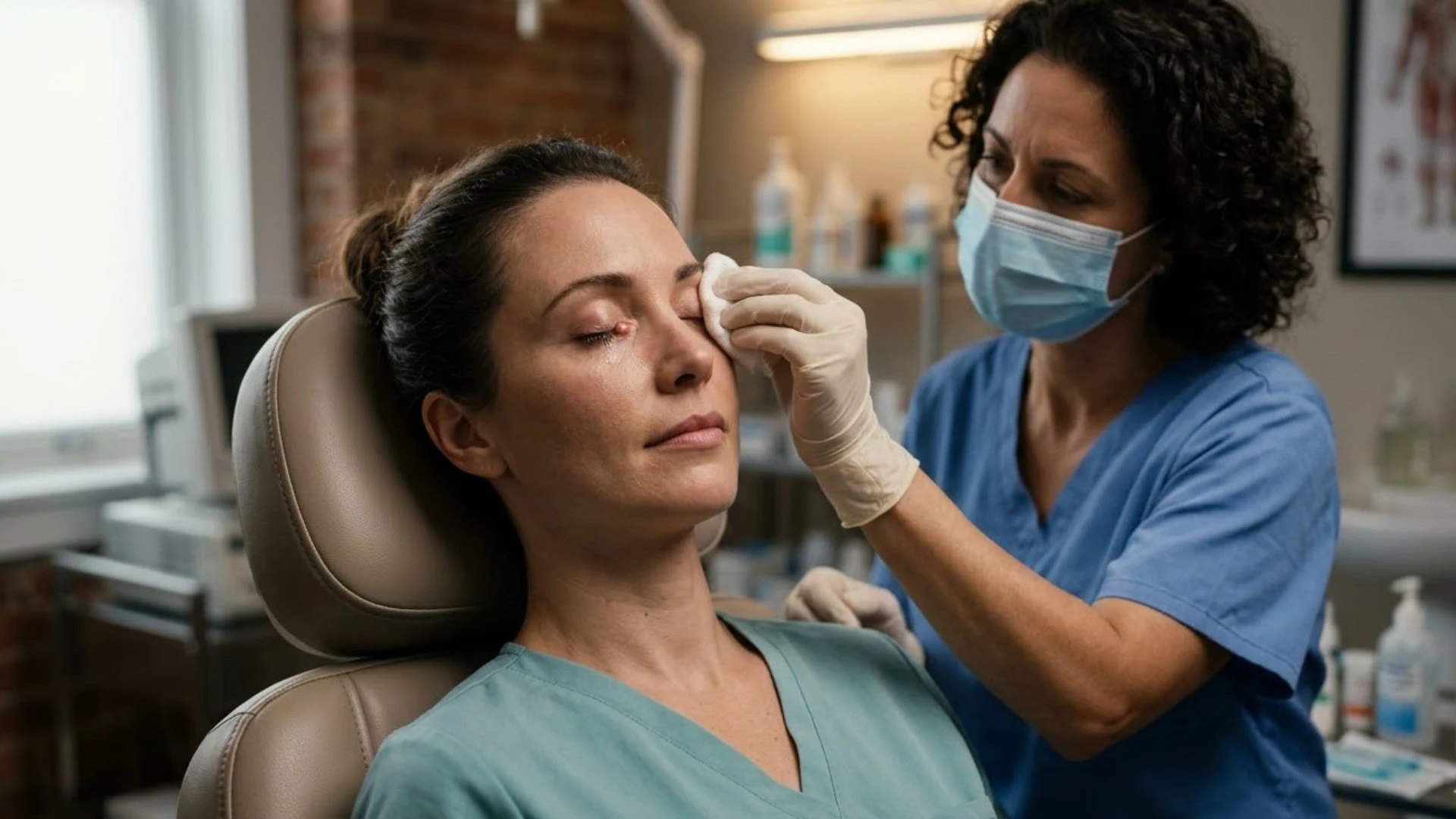
That red, painful bump on your eyelid showed up out of nowhere. You look in the mirror and think, “Great. Just great. Now what?”
Welcome to the world of styes. They’re annoying. They’re painful. And they always seem to pop up right before a big meeting or date night.
But here’s the good news: stye treatment doesn’t have to be complicated. Most eye stye treatment happens right in your bathroom. You don’t need a medical degree. You don’t need expensive prescriptions. You just need to know what works and what definitely does not.
I’ve dug through the research, talked to eye doctors, and collected real stories from people who’ve beaten these little monsters . Whether you’re wondering how to treat a stye for the first time or you’re a seasoned pro dealing with another round, this guide has your back.
Let’s get that eye feeling human again.
📋 Hordeolum (stye) — medical specifications
evidence‑based reference · diagnosis · microbiology · intervention · outcomes
| specification category | clinical & pathological details | treatment & management parameters | prognosis / time course |
|---|---|---|---|
| 🔬 Definition & types |
external hordeolum internal hordeolum
external: infection of Zeis (sebaceous) or Moll (apocrine) glands at lash follicle. Internal: infection of meibomian glands within tarsal plate. [citation:1][citation:4]
Acute, localized pyogenic abscess — 90–95% Staphylococcus aureus, occasionally S. epidermidis. [citation:1]
etiology gland obstruction + bacterial invasion → neutrophilic infiltration → pustule.
|
first line: warm compresses 5–15 min, 2–4x/day. [citation:3][citation:5] incision only if pointing / no resolution |
spontaneous rupture: 2–4 days [citation:3] complete resolution: 7–10 days (with conservative care) [citation:1][citation:5] |
| 🧫 Microbiology & pathophysiology |
• primary pathogen: Staphylococcus aureus (coagulase‑positive) [citation:1][citation:8] • less common: Staphylococcus epidermidis, Streptococcus species [citation:1] • mechanism: gland duct occlusion → sebum stasis → bacterial overgrowth → acute suppurative inflammation with polymorphonuclear leukocytes. [citation:1][citation:4] |
topical antibiotics (erythromycin, bacitracin) — moderate efficacy, mainly to prevent spread [citation:3][citation:5]. oral antibiotics (doxycycline, cephalexin) indicated if preseptal cellulitis or recurrent internal hordeola. [citation:4][citation:5] |
without antibiotics: self-limiting within 1–2 weeks. with early warm compresses: drainage often in 48–72h. |
| 📊 Epidemiology & risk strata |
prevalence: all ages; peak 30–50 yrs. Slightly ♀ > ♂ (cosmetics use). [citation:1][citation:2] • modifiable: poor eyelid hygiene, old eye makeup, contact lens misuse. [citation:7][citation:8] • comorbidities: blepharitis, meibomian gland dysfunction, rosacea, diabetes, seborrheic dermatitis. [citation:1][citation:2][citation:8] |
prevention strategies: daily lid hygiene, warm compress routine, replace mascara q3 months, avoid eye‑rubbing. [citation:7][citation:9] for blepharitis: lid scrubs with diluted baby shampoo or commercial wipes. |
recurrence rate: increased with blepharitis/rosacea; up to 25% within 1 year if underlying condition untreated. |
| 🩺 Diagnosis & differentiation |
• purely clinical: focal erythema, tender nodule at lid margin, sometimes yellowish head. [citation:2][citation:4][citation:8] • internal stye: pain, swelling on conjunctival side; may point posteriorly. differential: chalazion (nontender, chronic), dacryocystitis (below medial canthus), preseptal cellulitis (diffuse hot swelling). [citation:2][citation:4] |
No imaging/lab routinely needed. if atypical / non‑resolving → consider biopsy to rule out sebaceous carcinoma (esp. in older adults, recurrent chalazion‑like lesions). [citation:2][citation:4] |
diagnostic certainty >95% by history + exam. referral to ophthalmology if >2 weeks or vision changes. |
| 💧 conservative therapy specs | warm compress: 40–45°C (104–113°F); wet cloth, 10 min per session, 3–5x daily. mechanism: melts inspissated meibum, promotes vasodilation, encourages spontaneous drainage. [citation:1][citation:5] |
• massage after compress: gentle stroking toward lash line. [citation:5] • discontinue contact lenses until resolution. [citation:5][citation:7] • avoid eye makeup, keep face clean. [citation:5][citation:8] |
with strict adherence: 70% show improvement in 48h. without drainage, most still resolve within a week. |
| 💊 pharmacotherapy |
topical antibiotics (erythromycin ophthalmic ointment, bacitracin, gentamicin) — primarily to limit superficial bacterial spread; do not deeply penetrate internal hordeola. [citation:3][citation:4] oral antibiotics: tetracyclines (doxycycline 100mg BID) for meibomitis, anti‑inflammatory effect, and when cellulitis present. [citation:4] |
internal stye with severe inflammation: oral antibiotics + possible intralesional corticosteroid (triamcinolone) for persistent inflammatory nodules. [citation:4][citation:9] topical monotherapy insufficient for internal hordeola. [citation:4] |
if antibiotics indicated, response 3–5 days. oral therapy usually 7–10 day course. |
| 🔪 procedural / surgical |
indication: large, pointing, painful, fails to drain after 1–2 weeks of conservative care. [citation:5][citation:9] external hordeolum: incision with fine blade (11 or 15) parallel to lid margin; express contents. [citation:4] internal hordeolum: often requires conjunctival incision (perpendicular to lid margin). |
performed under topical/local anesthesia in clinic. incision and drainage (I&D) → immediate pain relief. post‑I&D: warm compresses, topical antibiotic. |
resolution 24h after I&D. recurrence possible if gland permanently damaged or underlying blepharitis persists. |
| ⚠️ complications / warning signs |
• preseptal cellulitis (spreading erythema, warmth, tenderness beyond lid margin) [citation:1][citation:4] • orbital cellulitis (rare: proptosis, pain with eye movements, decreased vision) — medical emergency. • progression to chalazion (chronic granuloma). [citation:1] |
if systemic symptoms (fever, chills) or spreading erythema → immediate broad‑spectrum IV antibiotics, CT imaging. [citation:4] biopsy for non‑resolving “stye” >1 month or suspicious irregular thickening. |
orbital cellulitis can cause permanent vision loss if untreated. early intervention crucial. |
average healing time
spontaneous: 4–7 days (external) / 8–14 days (internal) [citation:3][citation:6]
prevention recurrence
daily lid hygiene reduces recurrence by ~45% in blepharitis patients [citation:7][citation:9]
size / morphology
usually 2–5 mm diameter; internal hordeola may feel larger due to depth [citation:1]
What Actually Is a Stye? (And Why Does It Hurt So Much?)
A stye happens when a gland on your eyelid gets infected. Plain and simple. Bacteria—usually staph, which sounds scarier than it is—moves in and sets up shop .
Your eyelid has tiny glands. Some live at the base of your eyelashes. Others sit deeper inside the lid. When they get clogged and infected, boom. You get a tender red bump that screams “look at me” every time you blink .
There are two types:
External styes form at the base of an eyelash. They’re the ones you can usually see clearly. They look like a pimple on steroids .
Internal styes form deeper inside the eyelid. They hurt more because they’re pressing against your eye from the inside. You might not see a head, but you’ll definitely feel it .
Either way, it hurts. Your eyelid swells. It might be watered constantly. Light bothers you. Every blink reminds you something’s wrong .
Can You Really Cure a Stye Overnight?
Let’s be real for a second.
If someone promises you stye treatment overnight, they’re probably selling something. How to treat a stye fast is a reasonable question. But fast and overnight are different things .
Most styes take 3 to 5 days to really improve. Full healing runs 7 to 10 days .
That said, you can absolutely reduce the pain and swelling within 24 hours. The key is starting treatment immediately and being consistent .
One woman told me she caught her stye early, did warm compresses five times on day one, and woke up with the swelling cut in half. Another guy admitted he had ignored his for two days, then spent a week suffering. The moral? Start now .
The Best Treatment for Stye: Home Remedies That Actually Work
Let’s get down to business. Here’s your game plan for stye treatment at home.
1. Warm Compresses: Your New Best Friend
This is not optional. This is not negotiable. If you do one thing, do this .
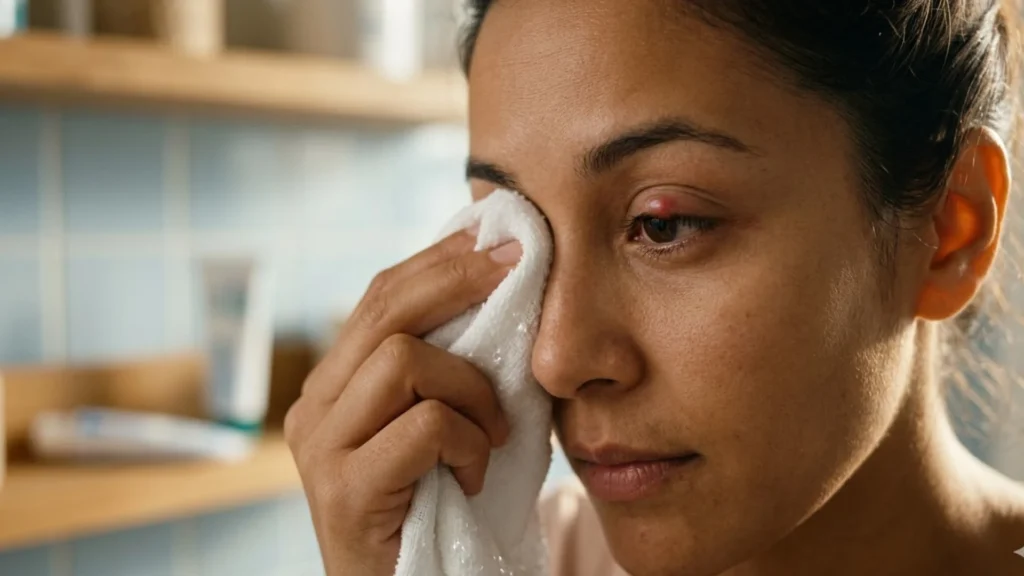
Take a clean washcloth. Run it under warm water—not scalding, just pleasantly warm. Wring it out. Hold it on your closed eye for 10 to 15 minutes .
Do this 3 to 5 times daily .
Why does it work? The heat liquefies the blocked oil. It increases blood flow. It helps the stye come to a head and drain naturally .
Think of it like coaxing a splinter out. You’re not forcing it. You’re helping your body do its job.
Pro tip: Microwave a damp washcloth for 20 seconds. Test it on your wrist first. Refold it as the edges cool down .
2. Keep It Clean
Wash your hands constantly. Before and after touching your eye. Before and after compresses. Before bed. When you wake up. All the time .
Mix baby shampoo with warm water. Use a cotton swab to gently clean your eyelid. No scrubbing. Just soft, careful wiping .
This removes crusting and cuts down on bacteria hanging around .
3. Over-the-Counter Options
OTC antibiotic ointments like bacitracin might help. They keep the area lubricated and provide some antibacterial action .
Pain relievers like ibuprofen or acetaminophen can reduce inflammation and discomfort .
Just know that ointments speed relief but won’t magically erase the stye overnight .
4. Hands Off Policy
Do not touch it. Do not rub it. Do not even think about squeezing it .
I know you want to. I know it’s tempting. But popping a stye is like inviting the infection to a party in your bloodstream. It spreads bacteria. It causes more swelling. It can damage your eyelid .
Let it drain on its own time. Your patience will be rewarded.
5. Ditch the Makeup
Throw away any mascara, eyeliner, or eyeshadow you used while the stye was active. Yes, even that expensive tube. Bacteria love hanging out in cosmetics .
Go makeup-free until the stye fully heals. Your eye needs to breathe. Cosmetics trap bacteria and slow everything down .
When you’re healed, buy fresh products .
6. Contact Lens Break
Glasses are your friend right now. Contacts irritate the area and can trap bacteria against your eye .
Once the stye clears, use a fresh pair. Don’t risk reinfecting yourself with old ones .
Natural Stye Treatment: What Science Says
People swear by natural remedies. Some have evidence. Some are just wishful thinking.
Chamomile tea bags can work as warm compresses. The warmth helps drainage. Some research suggests anti-inflammatory properties, but the heat is doing most of the work .
Green tea bags get mentioned a lot. Limited studies show possible benefits for eye conditions, but no solid proof that they beat plain warm water. Plus, tea leaves might irritate your eye .
Coconut oil has antimicrobial properties in theory. In practice? Not recommended by doctors. Skip it .
Turmeric paste applied externally might offer antibacterial effects, but keep it far from your actual eye .
Bottom line: a warm compress with a clean cloth is the safest, most proven method .
Stye Medicine: When Home Treatment Isn’t Enough
Sometimes home care needs backup. If your stye isn’t improving, your doctor has options.
Antibiotic Ointments and Drops
A prescription antibiotic for a stye comes as an ointment or drops. Erythromycin ointment is common. Azithromycin eye drops have shown good results for internal styes .
You apply these along your eyelid margin, usually at bedtime .
Oral Antibiotics
For severe infections or recurrent styes, oral antibiotics might be necessary. Doxycycline or cephalexin can fight bacteria from the inside .
Steroid Injections
Sometimes inflammation is the main problem. Steroid shots can reduce swelling quickly .
In-Office Drainage
If a stye becomes a hard lump that won’t drain, an ophthalmologist can make a tiny cut and empty it. Minor procedure, major relief .
Swollen Eyelid Stye Treatment: Handling the Pain
When your eyelid looks like a balloon, pain follows. Here’s how to survive.
Keep up with warm compresses. The heat soothes and promotes drainage .
Take ibuprofen if safe for you. It tackles both pain and inflammation .
Sleep with your head elevated. Extra pillows reduce fluid pooling around your eye overnight .
Avoid bright lights. Give your eye a break .
Painful eye stye remedy is mostly about consistency. Do the right things every few hours, and the pain fades faster.
Internal Stye Treatment vs. External Stye Treatment
Both types respond to the same basic care, but internal styes need extra patience.
External styes form at the lash line. You can usually see the head. Warm compresses help them pop and drain within a few days .
Internal styes live deeper. They hurt more. They take longer. The same warm compress routine applies, but it might take 1 to 2 weeks .
Internal styes sometimes turn into chalazia—hard, painless lumps from blocked glands. Those need different treatment, sometimes steroid shots or removal .
Stye Healing Time: What to Expect
Day 1-2: Peak swelling and pain. Start compressing immediately .
Day 3-4: Stye forms a head or starts draining. Pain decreases .
Day 5-7: Drainage finishes. Swelling goes down .
Day 7-10: Mostly healed. Maybe some minor redness .
Everyone heals differently. Follow the routine, and you’ll get there.
When to Call the Doctor
Home treatment works most of the time. But watch for these red flags :
- No improvement after one week
- Getting worse fast
- Extreme pain
- Bleeding
- Vision changes
- Fever or chills
- Redness spreading to the cheek or other parts of face.
- Eyelid swelling shut
These could mean the infection is spreading. Call your doctor or eye specialist immediately .
Prevention: Stop Styes Before They Start
Once you’ve had a stye, you’re more likely to get another. Break the cycle .
Wash your face daily. Clean eyelid margins gently .
Replace eye makeup regularly. Mascara every 2 to 3 months. Eyeliner every 3 to 6 months .
Never share eye makeup .
Wash your hands before touching your eyes .
Clean contact lenses properly. Replace as directed .
Manage underlying conditions like blepharitis, rosacea, or diabetes with your doctor’s help .
Conclusion
A stye is a pain. Literally. But stye treatment is straightforward. Warm compresses, clean hands, no makeup, no squeezing, and patience .
Most styes clear up within a week or so. If yours doesn’t, or if things get worse, see a doctor .
You’ve got this. That annoying bump doesn’t stand a chance against consistent care. Now go grab a washcloth and get started.
Frequently Asked Questions
How long does a stye usually last?
Most styes last 7 to 10 days with proper home care. They typically peak in pain around day 2 or 3, then start draining and healing .
Can I wear contacts with a stye?
No. Switch to glasses until the stye fully heals. Contacts irritate the area and can trap bacteria. Use a fresh pair once your eye recovers .
What’s the best eye drop for a stye?
Over-the-counter lubricating drops can soothe irritation, but they don’t treat the infection. Prescription antibiotic drops like azithromycin may help internal styes heal faster. Ask your doctor what’s right for you .
Why do styes keep coming back?
Recurrent styes often signal underlying issues like chronic blepharitis, rosacea, or poor eyelid hygiene. Diabetes can also increase susceptibility. Talk to your doctor about breaking the cycle .
Is a stye contagious?
The bacteria causing styes can spread through contaminated towels, makeup, or direct contact. Practice good hygiene and don’t share personal items to protect others .
References:
- Johns Hopkins Medicine. Hordeolum (Stye).
- Cleveland Clinic. How To Get Rid of a Stye. January 2025.
- Drugs.com. Stye – What You Need to Know. February 2026.
- Cleveland Clinic. How To Get Rid of a Stye. January 2026.
- Ubie Health. What actually works for how to get rid of a stye overnight? December 2025.
- StatPearls. Hordeolum (Stye). December 2024.
- Dr. Christopher Hobbs. Stye Herbal Therapeutics Database.
- FamilyDoctor.org. Sty.
- Ubie Health. How can I cure a stye overnight? January 2025.
- Drugs.com. Stye (Ambulatory Care). October 2025.
Read More: Celine Dion’s Disease
About the Author